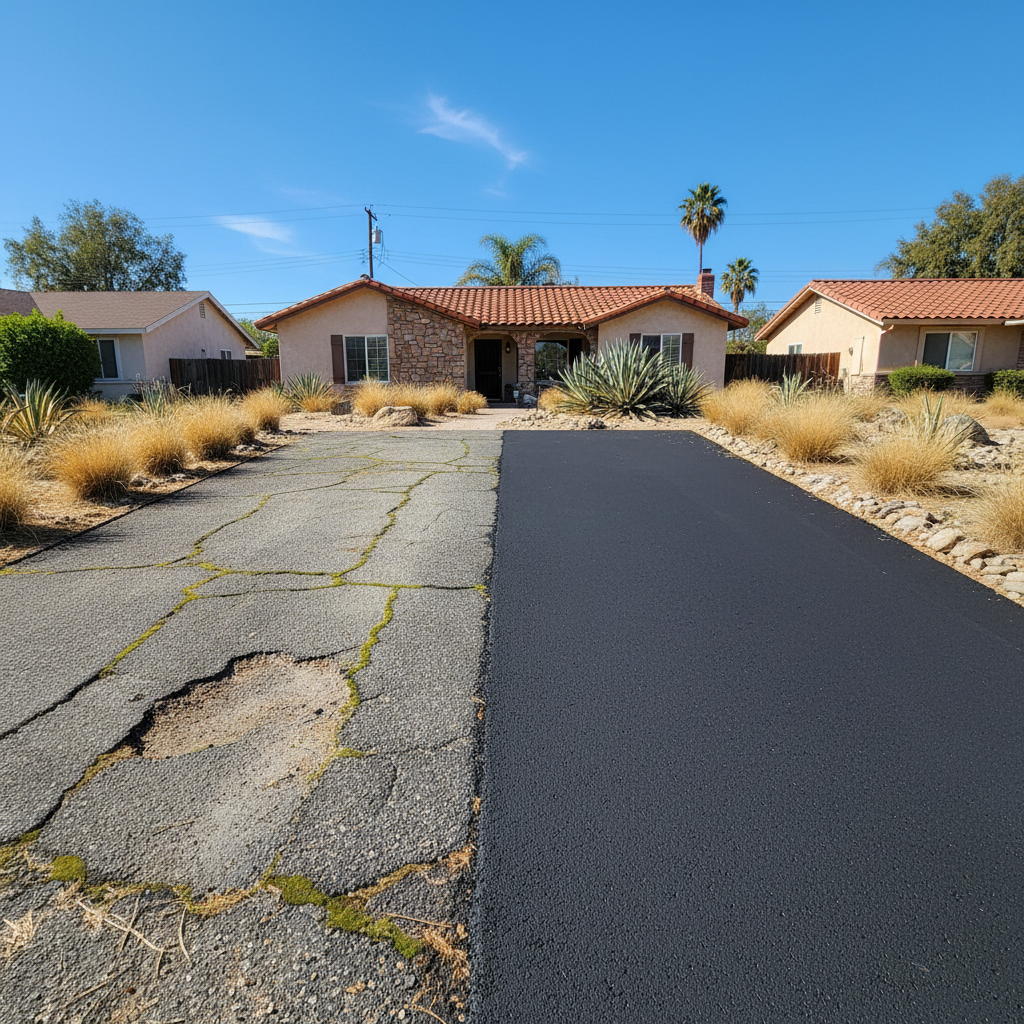
So, you're thinking about a new driveway, huh? Or maybe replacing an old, cracked one. It's a big decision, and folks around Banning usually boil it down to two main choices: asphalt or concrete. Both get the job done, but they're definitely not the same. As someone who's been laying down pavement for years, I've seen firsthand how each holds up, especially with our specific weather out here.
Initial Cost: Where Does Your Money Go?
Let's talk money first, because that's usually the first thing on anyone's mind. Generally speaking, asphalt is almost always cheaper to install upfront than concrete. You're looking at a lower material cost and often a quicker installation time, which also saves on labor. If you're on a tighter budget and need a good, solid surface, asphalt is usually the way to go.
Concrete, on the other hand, costs more per square foot. The materials themselves are pricier, and the installation process is more labor-intensive and takes longer to cure. You might be paying anywhere from 30% to 70% more for concrete initially. That's a significant difference, especially for a larger driveway.
Durability & Lifespan: Built to Last?
This is where things get interesting, especially for us in Banning. Our summers are brutal, right? Those triple-digit days really put pavement to the test. Both asphalt and concrete are durable, but they handle stress differently.
- Asphalt: It's flexible. That's its superpower. When the ground shifts a little – which can happen with our clay soils around the foothills – or when temperatures swing wildly, asphalt can flex with it. This means it's less prone to cracking from ground movement. However, constant direct sun and heavy traffic without proper maintenance can make it brittle over time. With regular sealcoating every few years, an asphalt driveway can easily last 20-30 years, sometimes more.
- Concrete: It's rigid. Very strong, but rigid. It handles heavy loads well, but its rigidity is also its weakness when the ground moves. You'll often see expansion joints cut into concrete to try and control where cracks form, but hairline cracks are pretty common over time, especially with our hot days and cooler nights causing expansion and contraction. Once a crack forms in concrete, it tends to spread. A well-installed concrete driveway can last 30-40 years, but those cracks might start showing up sooner.
Maintenance: What's the Upkeep?
Nobody wants a high-maintenance driveway, but both options need a little love to stay looking good and performing well.
- Asphalt: It needs sealcoating. I can't stress this enough. Think of it like sunscreen for your driveway. Sealcoating every 2-5 years (depending on traffic and sun exposure) protects the asphalt from UV rays, water penetration, and oxidation. It keeps it flexible and extends its life. It's a relatively inexpensive process, and it makes your driveway look brand new again. Small cracks can also be filled fairly easily.
- Concrete: It's often seen as