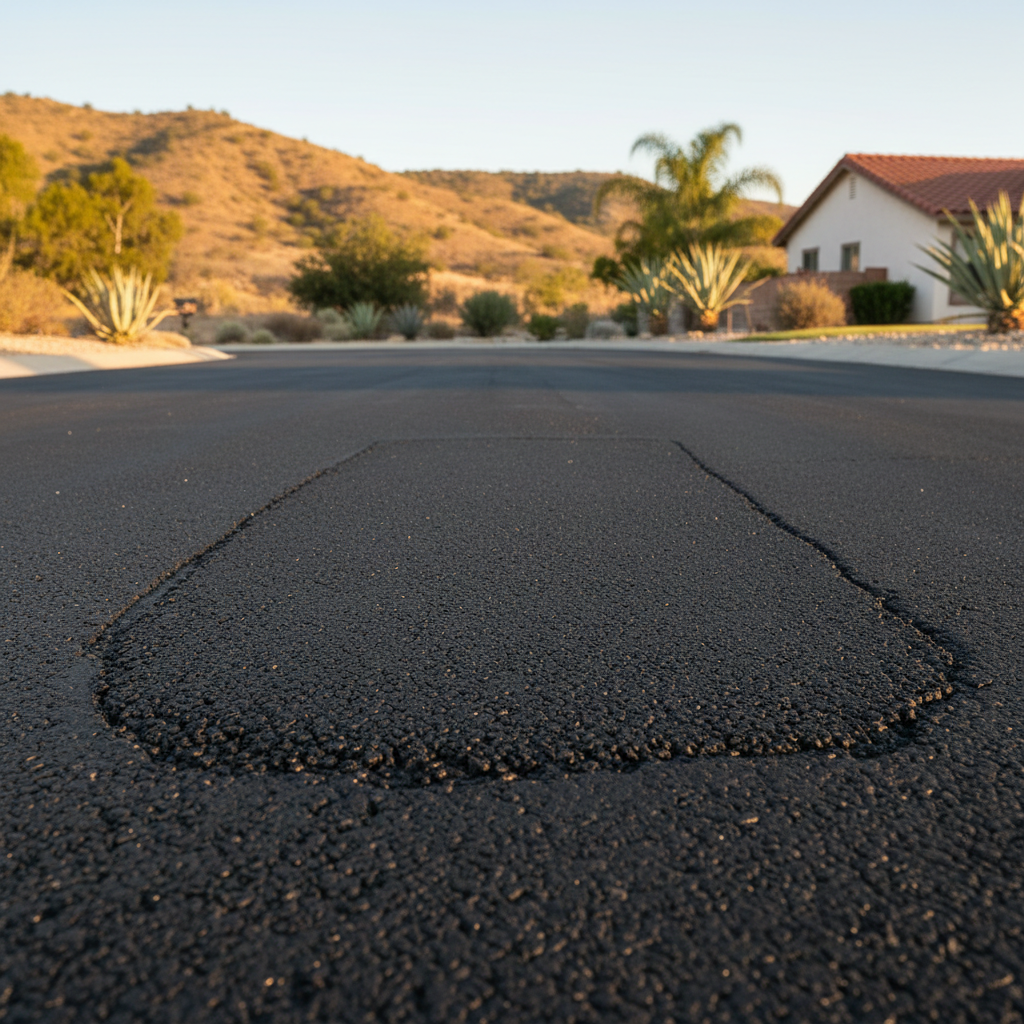
Do I really need to patch this small crack, or can I just ignore it?
Look, I get it. You see a tiny crack, maybe a quarter-inch wide, and you think, "That's not a big deal." But here's the thing about asphalt, especially out here in Banning where we get those hot summers and occasional heavy rains: those small cracks are like open invitations for trouble. Water gets in, seeps down to the base layer, and then when it freezes (yeah, it happens here, especially up in the higher elevations like the foothills near the San Gorgonio Pass), that water expands. That expansion turns a small crack into a big one, and suddenly you've got a pothole. You ignore it long enough, and you're not just patching a crack anymore; you're looking at a much bigger, more expensive repair, or even a full repave. So, no, don't ignore it. Patch it early, save yourself a headache and some cash down the road.
What's the difference between cold patch and hot patch, and which one should I use?
This is a common question, and it's an important one. You'll see bags of cold patch at the hardware store, right? That stuff is basically asphalt aggregate mixed with a petroleum solvent that keeps it pliable at room temperature. It's a temporary fix, a Band-Aid. It's good for quick, emergency repairs if you've got a dangerous pothole and can't get a pro out right away, or if you're just trying to get through winter. It's easy to use, you just tamp it down. But it doesn't bond well, it's not very durable, and it'll break down over time, especially with our Banning sun beating down on it.
Hot patch, on the other hand, is the real deal. It's what we use at Horizon Asphalt Solutions. It's hot asphalt mix, applied at high temperatures, usually around 300-350 degrees Fahrenheit. When it cools, it forms a strong, durable bond with the existing asphalt. It's a permanent repair. You need specialized equipment and expertise to apply it correctly. So, if you want a lasting repair that blends in and holds up, you need hot patch. For a quick, temporary fix you do yourself, cold patch can work in a pinch, but don't expect miracles.
How long does an asphalt patch usually last?
How long a patch lasts really depends on a few things: the quality of the original asphalt, the type of patch, and how well it was installed. If you're talking about a professionally installed hot patch, done right with proper base preparation and compaction, you can expect it to last for many years, often as long as the surrounding asphalt, maybe 5-10 years or even more. We've seen patches hold up great for a decade if they're done well and the underlying issue was addressed.
Cold patches? You're lucky if they last a year, especially in high-traffic areas or where water pools. They tend to unravel and break apart pretty quickly. That's why we always recommend hot patching for anything you want to be a permanent solution.
Can I patch my driveway myself, or should I hire a professional?
You can definitely buy cold patch and try to fill a pothole yourself. For a tiny, shallow crack or a very small pothole, it's doable as a temporary measure. But let me be straight with you: it's not going to look great, and it's not going to last. You'll likely be doing it again next year.
For any significant damage, or if you want a patch that actually blends in and lasts, you really need a professional. We've got the right equipment – asphalt saws for clean cuts, hot asphalt mix, rollers for proper compaction, and the know-how to prepare the base properly. Without that, you're just putting a band-aid on a deeper problem. Plus, working with hot asphalt is dangerous if you don't know what you're doing. Save yourself the hassle and potential injury; call in the pros for anything beyond a superficial, temporary fix.
How much does asphalt patching cost in Banning, CA?
That's like asking "how much does a car cost?" It varies a lot. The cost of asphalt patching depends on several factors: the size of the area needing repair, the depth of the repair, whether the base layer needs work, and the type of patching method used. A small crack fill is obviously going to be a lot less than a large, deep pothole repair that requires cutting out a section and rebuilding the base.
Generally, we charge by the square foot or by the job. For a typical residential driveway, you might be looking at a few hundred dollars for a small to medium-sized patch. Larger, more complex repairs could be more. The best way to get an accurate price is to have us come out and take a look. We'll give you a free, no-obligation estimate so you know exactly what you're getting into. We're transparent about our pricing, no surprises.
What's the best time of year to get asphalt patching done in Banning?
The ideal time for asphalt patching is when it's warm and dry. Here in Banning, that means spring, summer, and early fall are usually best. You want the ground to be dry, and the air temperature to be consistently above 50 degrees Fahrenheit, ideally even warmer. This allows the asphalt to cure properly and bond well with the existing pavement.
Trying to patch in the middle of winter, especially if we've had a lot of rain or cold snaps, isn't ideal. The cold temperatures can make the asphalt brittle, and moisture can compromise the bond. We can sometimes do emergency cold weather repairs, but for a quality, long-lasting job, we prefer to work when the weather cooperates. It makes a big difference in the final product's durability.